
Backlash Presidents
Julia R. Azari

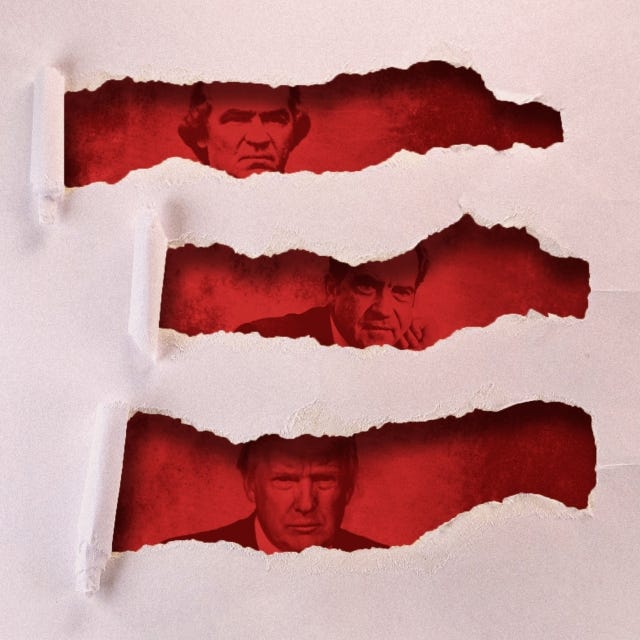
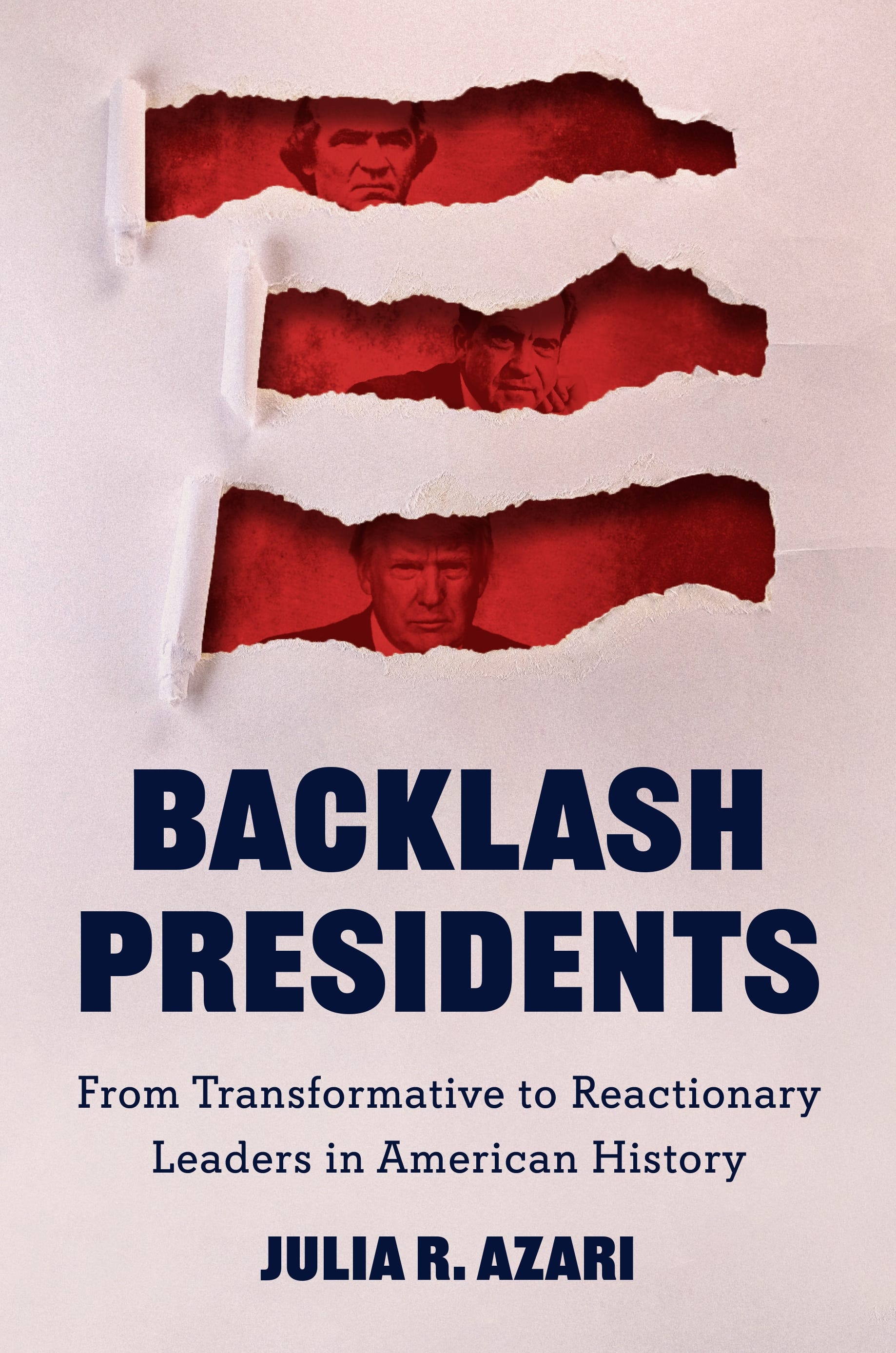
When Barack Obama won the White House in 2008, becoming the nation’s first Black president, the stage was set for Donald Trump’s eventual rise to power. In Backlash Presidents, Julia R. Azari shows how, throughout American history, administrations that challenge the country’s racial status quo are followed by presidents who deal in racially charged politics and presidential lawlessness, culminating in impeachment crises.
How did you get the idea to connect race and presidential impeachment?
Julia R. Azari: The connection between Trump, Nixon, and Andrew Johnson came to me sometime after Trump fired FBI Director James Comey in May, 2017. In addition to a shared disdain for political opponents, they shared another commonality, which is that they were all preceded by presidents who disrupted the racial status quo. Lincoln’s presidency resulted in the end of slavery; he issued the Emancipation Proclamation and backed the 13th amendment and gradually helped to shift the Union cause in the Civil War to one of ending slavery. Lyndon Johnson backed and signed the bills that made the Civil Rights revolution. And Barack Obama was the first African American president, a fact that produced a lot of celebration and national pride but also a kind of racialized opposition that set him apart from even the contentious presidencies of Bill Clinton and George W. Bush.
I had been thinking about race and the presidency for a few years at that point. I’d decided to incorporate a strong race theme into my American presidency course in 2015, and the students loved it. At that point, Trump was running for the Republican nomination, but it was far from obvious that he would succeed, and we weren’t talking about him that much in class. But I covered some material from before the civil war, and some from the decades leading up to civil rights in the 1960s, and there were some real parallels – presidents were generally hesitant to rock the boat. So, it followed that when one does, the political ramifications are very profound.
How do you define backlash?
JRA: This is both a common and a controversial term, and I gave my use of it a lot of thought. Some scholars who I really respect and cite extensively in the book have criticized the term for many reasons. One reason is that it makes it seem like periods of racially contentious politics just pop up episodically, rather than being woven into the fabric of American politics. Another is that it’s unclear what the demands of backlash are. Finally, there’s a fraught component to this if you think about the urge to practice cautious politics and avoid a backlash.
I address all these concerns, I hope, throughout the book. First, I am arguing that race is woven into the fabric of American politics – and that’s why presidents who challenge the status quo create reverberations across norms, Congress, both political parties. The cases of Lincoln, Johnson and Obama show that once the power of the presidency has been harnessed to alter the racial arrangement, a lot of things change in the political system.
Second, I argue that the unclear demands are part of backlash politics. There’s a demand to go back to some point in the past, and that can’t really be met. And backlash politics are hardly an unstoppable force. Instead, I present these politics as a very ambivalent force: They can create electoral success if combined with an unpopular incumbent or a disastrous opponent or a particular kind of electoral structures (like the Electoral College). But they aren’t a surefire ticket to broad popularity, and they galvanize opposition.
Finally, I am definitely not advocating for cautious politics that are designed to avoid upsetting the status quo and thus not creating backlash. Instead, I think the only way out of the race situation in this country is through, by confronting what has been and what people’s experiences are now.
The main point of the book isn’t to offer advice, really, but to the extent it does, it suggests that we do what it takes to stop repeating this cycle! The basis of this cycle is the tendency in national politics to sweep race under the rug while the issues simmer and the contradictions eventually become too much for the system to bear.
This book is also ultimately a story about power in American politics – how even a hint that people who have been kept out of power might gain a bit more leads to serious pushback and uncertainty. The story I tell is mostly about the politics of Black-white relations, but there’s a story to be told about gender, about immigrants and immigration, about class and economics.
What do you hope readers will take from your book?
JRA: In addition to the messages in the previous answer about confronting the realities of race and politics in America, I hope that we understand presidential impeachment a bit differently. I especially wanted to offer a new perspective on Watergate. Past scholars have connected it to the tumultuous politics of the time, but the way that Nixon engaged in election interference, denial of legitimate opposition, and use of the government to pursue political opponents are all connected to racial politics. And it was Black legislators who were among the earliest to question Nixon’s execution of the office and to suggest impeachment. What connects this case to the other impeachment cases is that during backlash politics, the country winds up with presidents who have trouble being the leader for the entire country and carrying out the law.
How have the politics of racial backlash and the presidency changed over time?
JRA: There have been two big changes, and they are related. First, people who are outside the traditional groups have gained political power. We have a way to go, but we have a much more diverse set of officeholders in 2025 than in most of the points covered in the book. Women, people of color, and members of the LGBTQ+ community hold positions of power in law, business, and education. That changes the dynamics that I describe.
The second major change is what most political observers call “polarization” – the parties have grown apart on a lot of issues, and they have “sorted” around attitudes of race, with Republicans and Democrats being pretty distinct from each other on a variety of race attitude measures. This hasn’t been the historical norm, and it actually presents an opportunity for the kind of (peaceful, verbal) confrontation I think is necessary. But it’s not necessarily clear that the politics of 2025 are going to bring that, either.
Which president’s racial legacy is most misunderstood?
JRA: This is a pretty crowded category, but the contemporary story that deserves more attention is George H.W. Bush’s back-and-forth with Congress over the 1991 civil rights bill, which made it easier to sue your employer for discrimination. Conservative populists - including Pat Buchanan, who challenged Bush in the 1992 presidential primary – called it a “quota bill,” employing the language of affirmative action that is still potent in our politics today. Bush was not enthusiastic about the bill but also did not want to be seen as obstructing civil rights. It shows how difficult it is for presidents to navigate race politics in the post-civil rights era. In a weird way, this foreshadowed the backlash against Obama when he dared to talk about race and how it affects American life: when presidents in this era violated a norm of colorblindness, the political response could be very volatile.
Julia R. Azari is professor of political science at Marquette University. She is the author of Delivering the People’s Message: The Changing Politics of the Presidential Mandate and the editor (with Lara M. Brown and Zim G. Nwokora) of The Presidential Leadership Dilemma: Between the Constitution and a Political Party. Her work has been featured widely in the media, including The New York Times, MSNBC, Politico, and FiveThirtyEight.
https://press.princeton.edu/books/hardcover/9780691246956/backlash-presidents